Research
From living systems to measurable signals.
The Engelberg Lab explores how engineered biological systems can sense, respond to, and communicate with the physical world. We combine synthetic biology, bioengineering, material science, and optical sensing to understand how biological activity can be translated into measurable information. Our work spans fundamental questions in cellular sensing and signal generation through the design of living sensors and responsive systems built to function beyond controlled laboratory environments. Ultimately, we aim to create biological technologies that are not only programmable, but also observable, robust, and deployable in the field.

The signals we need most can be the hardest to measure, where we care. Many biological readouts were built in controlled laboratories, where readouts can be carefully managed. In the field, those assumptions break: fluorescence is compromised by background light and requires intense laser technology, luminescence is too weak for remote detection, and conventional measurements often require close access or physical sampling.
Many of the signals we care about are very difficult to capture with conventional measurements. Environmental contamination, physiological changes, and biological stress can emerge unevenly across space and time, while traditional sampling often provides only isolated snapshots.

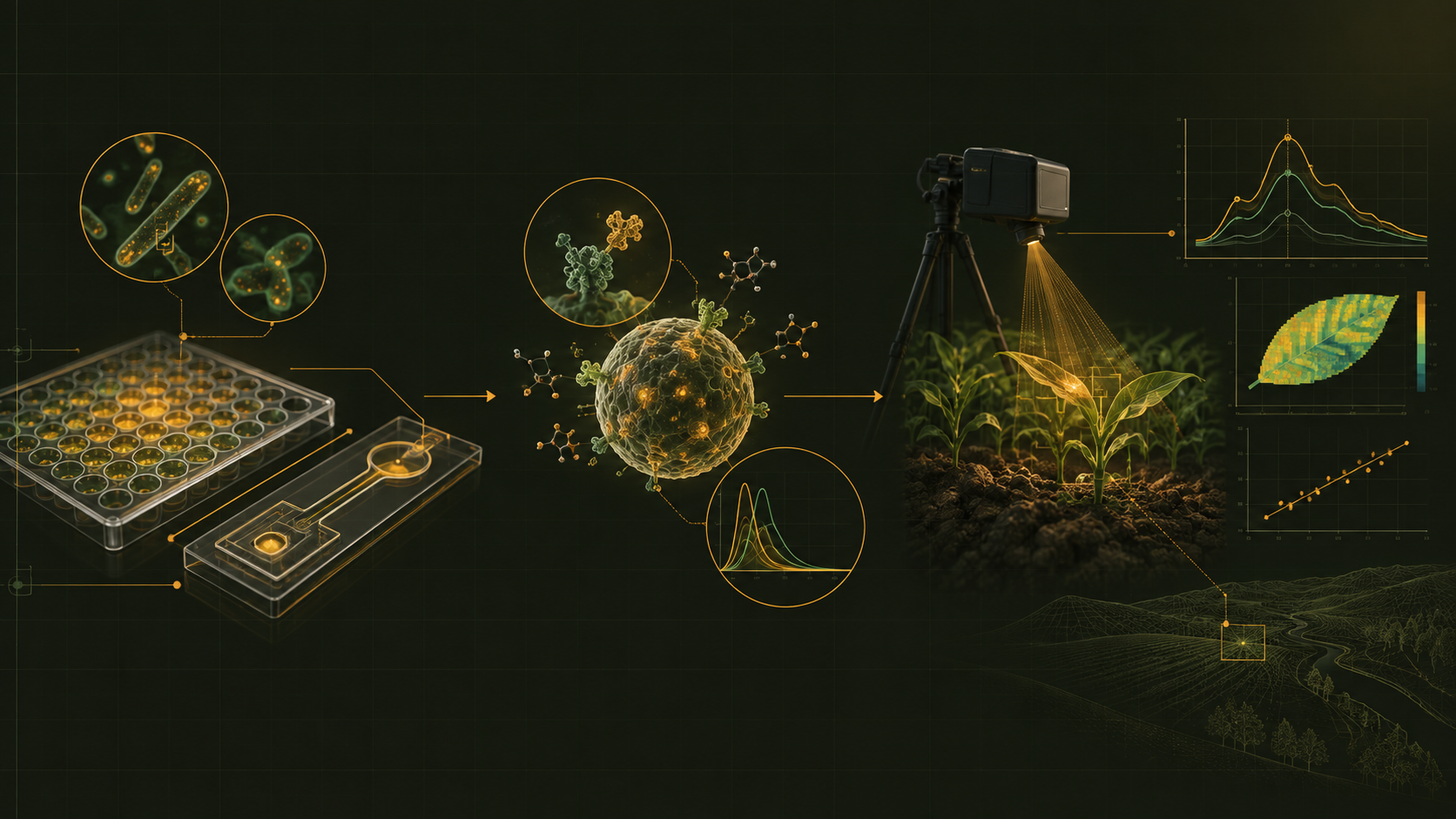
Biological sensing has enormous potential, but most of it stays confined to the lab. Taking it into the field means understanding how living systems behave outside ideal conditions, and making sure biological information stays useful, clear, and accessible right where decisions get made.